Article
African Geometry and the Language of Space
Mar 17, 2026
Article
Mar 17, 2026
Design often begins long before we realise we are learning it.
Many of the ideas that shape how I approach interior design today were present in the environments I grew up in. At the time they did not feel like design lessons; they were simply part of everyday life. Yet over time, these objects and traditions began to reveal deeper principles about proportion, materiality, and the relationship between form and function.
Across many African cultures, everyday objects carry a remarkable design intelligence. Their shapes are deliberate, their materials purposeful, and their functions clearly defined.
In many ways, these traditions form the quiet foundation of what we now recognise as modern African design thinking
African craft traditions are deeply rooted in geometry.
Patterns appear in woven textiles, carved objects, pottery, and architecture. These geometric rhythms are not purely decorative; they establish balance, repetition, and structure.
Growing up within the Shona cultural environment, these patterns were everywhere—sometimes obvious, sometimes subtle. They appeared in carved wooden objects, woven materials, and architectural arrangements.
Only later does one begin to recognise that these visual patterns are in fact expressions of spatial intelligence. Geometry provides order. It creates rhythm within objects and within environments.
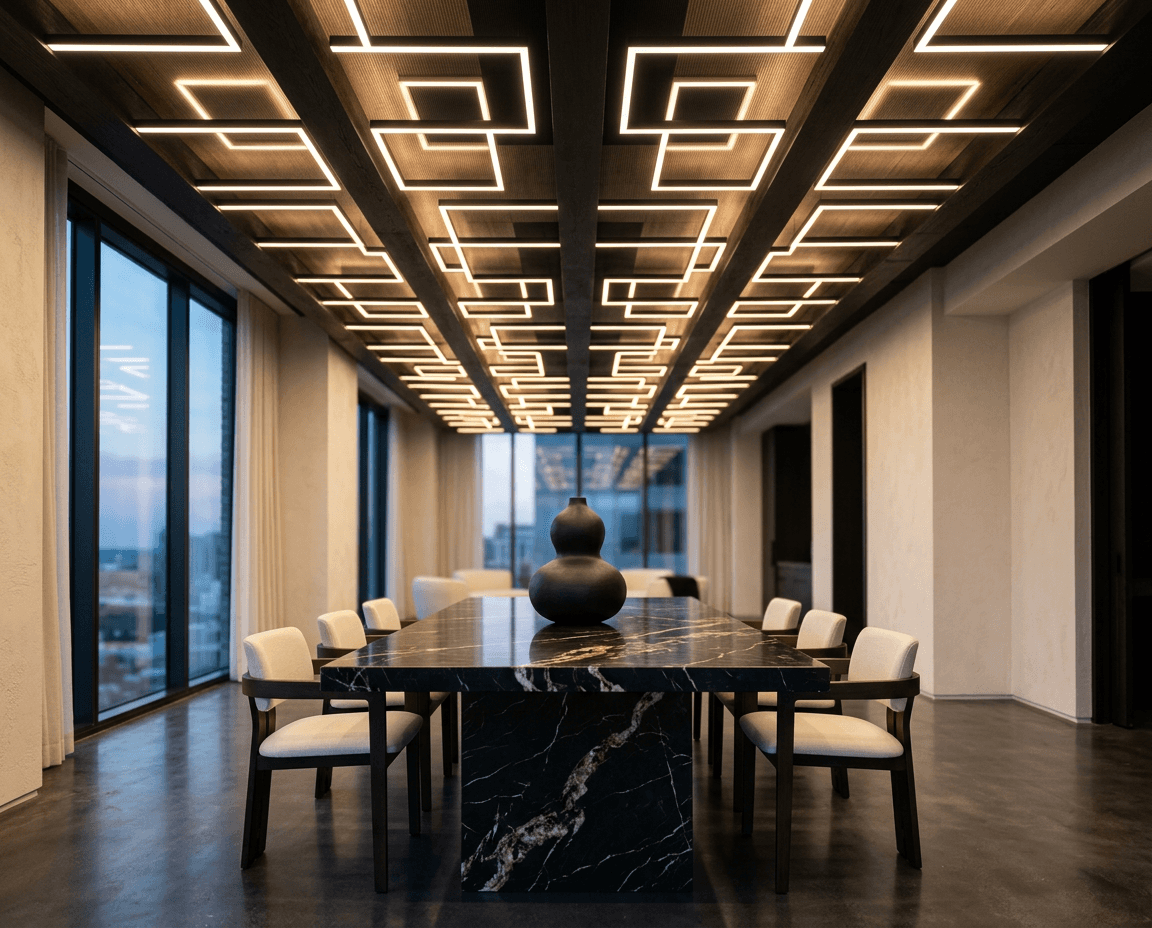
In contemporary interiors, this principle often guides how we compose space. Geometric lines may shape ceiling structures, wall panelling, or lighting installations. Repetition may appear in architectural details or material layouts.
The result is an interior that feels balanced and composed, even when the geometry itself is not immediately visible.
One of the most fascinating design lessons from traditional life can be found in the calabash.
Across many African cultures, calabashes were crafted for specific purposes. Each one carried its own form and function. Some were used for cooking starches such as sadza, the traditional ground maize meal that forms the foundation of many Southern African meals. Others were crafted specifically for relishes and stews, while some were reserved for water. Certain calabashes were even designed solely for traditional African beer.
At first glance, these vessels might appear similar. Yet each one was carefully shaped for its intended use.
This distinction reflects a powerful design principle: form must follow function.
The beauty of the calabash lies not only in its material or craftsmanship, but in the clarity of its purpose. One calabash could not easily replace another. Its shape, size, and treatment were designed around a specific role.
This idea continues to guide much of our thinking in interior design. Two objects may appear visually related, yet their functions must remain distinct. A lounge chair must invite relaxation, while a dining chair must encourage upright posture and conversation. A lighting fixture intended to create atmosphere must behave differently from one designed for task lighting.
When design respects function, beauty naturally follows.
Another object that carries remarkable design intelligence is the woven reed mat.
For generations, these mats served as the earliest forms of beds within many homes. Their woven structure created a surface that was both resilient and breathable. Yet their role extended far beyond sleep.
The same woven mat could also function as a floor covering, creating warmth and texture within living spaces. In this way, the mat acted simultaneously as bed and rug, adapting to the needs of daily life.
What is remarkable about these woven objects is their material logic. Reeds were flexible, abundant, and well-suited to weaving. The resulting surface carried both strength and softness.
Today, the influence of woven materials continues to appear in contemporary design. The logic of weaving has evolved into many other applications: textured wallpapers, architectural wall panels, upholstery fabrics, and even lighting elements.
What began as a simple reed mat now lives on in countless modern materials.
This is one of the most beautiful aspects of design evolution. Materials change, technologies evolve, yet the original logic remains.
When these cultural objects are viewed together—the calabash, the carved stool, the woven mat, they reveal something deeper than craft tradition.
They demonstrate a sophisticated understanding of structure, proportion, and purpose.
Geometry gives order to the object. Material determines its strength and texture. Function defines its final form.
These same principles guide contemporary spatial design.
In a modern interior, geometry may define how a ceiling plane intersects with a wall. Materials may determine how light interacts with surfaces. Furniture and architectural elements must always respond to the way people actually inhabit the space.
In this sense, the lessons of traditional craft continue to influence the most contemporary interiors.
At King Farai, our design work often involves translating these cultural principles into modern architectural environments.
The sculptural simplicity of a calabash may inspire the silhouette of a vessel sink or decorative object. The woven logic of reed mats may appear through textured wall coverings or upholstery fabrics. Geometric patterns drawn from traditional craft may guide architectural detailing or lighting compositions.
These translations are rarely literal.
Instead, they capture the underlying intelligence of the object—the way form, material, and purpose come together to create something both beautiful and useful.
This approach allows heritage to remain present within contemporary interiors without becoming nostalgic or decorative.
One of the most powerful lessons from African craft traditions is that beauty rarely exists without purpose.
Objects were designed to serve life. Their forms were shaped by function, their materials chosen for practicality, and their proportions refined through generations of use.
This quiet intelligence continues to influence how we think about design today.
When contemporary interiors embrace these principles—clarity of function, respect for materials, and balanced geometry—they achieve something rare: spaces that feel both modern and timeless.
In this way, the lessons of tradition continue to shape the future of African luxury design.